


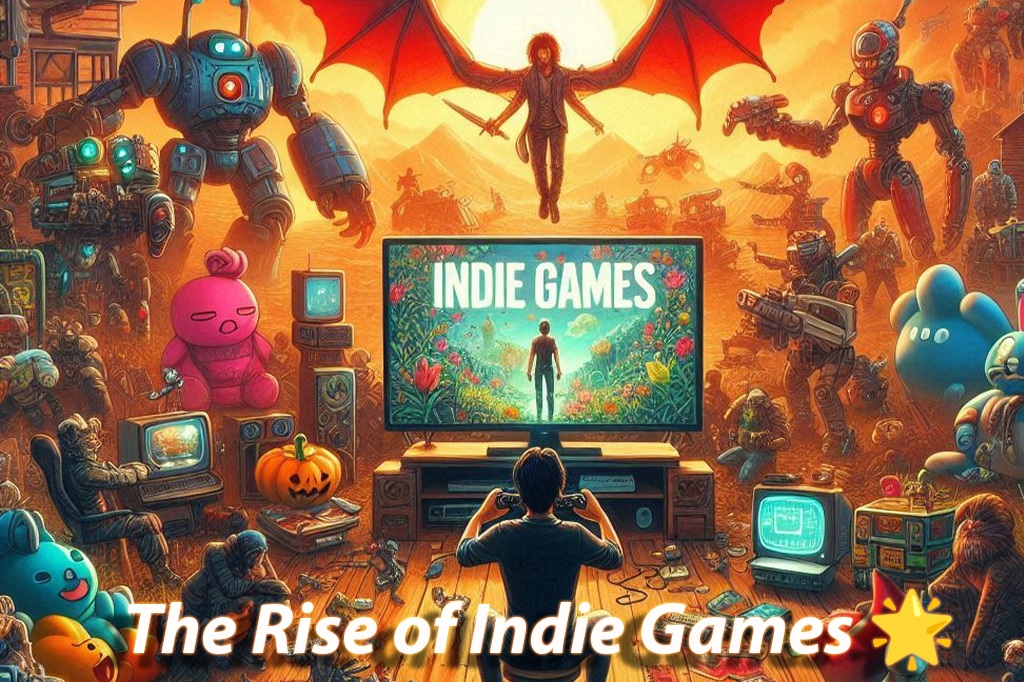
The Rise of Indie Games 🌟
Why small studios and solo developers are creating some of the most innovative games
🎮 Introduction
For years, the gaming industry has been dominated by major publishers like Nintendo, Sony, Microsoft, and Ubisoft. Blockbuster titles with million-dollar budgets and massive development teams set the tone for what gamers expect. But in recent years, something remarkable has happened: independent (indie) games have risen to the forefront of creativity, innovation, and storytelling.
From pixel-art adventures to emotionally rich narratives, indie games are proving that you don’t need billion-dollar budgets to make a masterpiece—you just need vision, passion, and creativity.
🌟 What Defines an Indie Game?
An “indie game” typically refers to titles developed by small teams—or sometimes even a single developer—without the financial backing of a major publisher. These creators often self-publish or use platforms like Steam, itch.io, and Epic Games Store, as well as consoles that now welcome indie titles.
Unlike AAA studios that focus heavily on mass-market appeal, indie developers have the freedom to take risks, experiment with unusual mechanics, and tell unconventional stories. This creative freedom is what has made the indie scene thrive.
💡 Innovation Over Budget
While AAA games often wow players with cutting-edge graphics and massive open worlds, indie games shine in different ways:
-
Unique Mechanics – Untitled Goose Game lets you play as a mischievous goose causing chaos in a village—an idea no big studio would gamble millions on.
-
Emotional Storytelling – Celeste explores themes of anxiety and self-discovery within a platforming adventure.
-
Minimalist Design – Journey uses simple controls and visuals to deliver an unforgettable emotional experience.
Without pressure from corporate boards, indie devs can chase creative visions, no matter how niche. This is why many of the most innovative gaming trends—roguelikes, survival crafting, narrative-driven adventures—have roots in indie titles.
🎨 Artistic Expression in Games
Indie games are often celebrated for their artistic expression. Since budgets are smaller, developers rely on creativity in design, music, and storytelling rather than hyper-realistic graphics.
Take Hollow Knight, a hand-drawn Metroidvania that became a global hit, or Gris, a breathtaking watercolor-like platformer that tells its story through art and emotion rather than dialogue. These games show that video games can be more than entertainment—they can be interactive works of art.
Music also plays a key role. Undertale’s soundtrack by Toby Fox is now iconic, shaping the emotional resonance of the entire game. Indie devs often compose their own music, giving their games a deeply personal touch.
🌍 Accessibility & Global Reach
One reason indie games have flourished is accessibility. Thanks to digital platforms like Steam, Xbox Game Pass, Nintendo eShop, and mobile app stores, indie developers can publish globally without needing physical distribution.
Crowdfunding platforms like Kickstarter and Patreon have also played a huge role. Games such as Shovel Knight and Hyper Light Drifter were brought to life thanks to community funding. This direct support system empowers developers to stay independent while building strong relationships with their player base.
⚡ Community-Driven Development
Unlike big studios, indie developers often maintain close connections with their communities. Players might test alpha or beta versions, provide feedback on Discord, or vote on features. This transparency creates a sense of collaboration between creators and players.
Games like Minecraft (which started as a solo indie project before Microsoft acquired it) and Hades by Supergiant Games grew with the help of early community engagement. This model not only improves the game but also fosters loyal fan bases.
💰 Success Stories of Indie Games
Indie games are no longer just “small passion projects”—many have achieved worldwide recognition and commercial success:
-
Minecraft – Created by Markus “Notch” Persson as an indie project, it became one of the best-selling games in history.
-
Among Us – Released quietly in 2018, it exploded in popularity during the pandemic thanks to streamers and word of mouth.
-
Stardew Valley – Developed entirely by one person, Eric Barone, it has sold millions of copies and become a farming-sim phenomenon.
-
Hades – From Supergiant Games, it redefined the roguelike genre with polished gameplay and storytelling, winning multiple Game of the Year awards.
These success stories prove that indie games can compete—and even outshine—AAA titles.
🚀 Challenges Indie Devs Face
Despite their creativity, indie developers often face hurdles:
-
Limited budgets – Making games is expensive, and small studios lack the financial cushion of big publishers.
-
Visibility issues – With thousands of games launching each year, it’s hard for an indie title to stand out.
-
Crunch & burnout – Many indie devs work solo or in small teams, juggling coding, art, marketing, and publishing.
Yet, the passion behind these projects often outweighs the challenges, and players increasingly value supporting indie developers.
🔮 The Future of Indie Games
As technology advances, indie games are poised to grow even further:
-
AI tools are making game development easier, helping small teams build worlds, design characters, and even generate dialogue.
-
Subscription services like Xbox Game Pass and PlayStation Plus give indies more visibility, putting them alongside AAA titles.
-
Cross-platform publishing ensures players can enjoy indie games on PC, console, and mobile alike.
Most importantly, players are embracing the diversity and creativity of indie games. They want fresh stories, innovative gameplay, and heartfelt artistry—something indie devs are perfectly positioned to deliver.
🌟 Conclusion
The rise of indie games represents a shift in the gaming industry—one where creativity and innovation matter more than blockbuster budgets. Indie developers are proving that powerful stories, bold mechanics, and unique art styles can capture players’ hearts just as effectively as high-budget spectacles.
From one-person projects to small teams challenging industry giants, indie games are not just surviving—they’re thriving. And as the next generation of players continues to value originality and passion, the future looks brighter than ever for indie creators.
The indie revolution isn’t just here—it’s shaping the future of gaming itself.
