


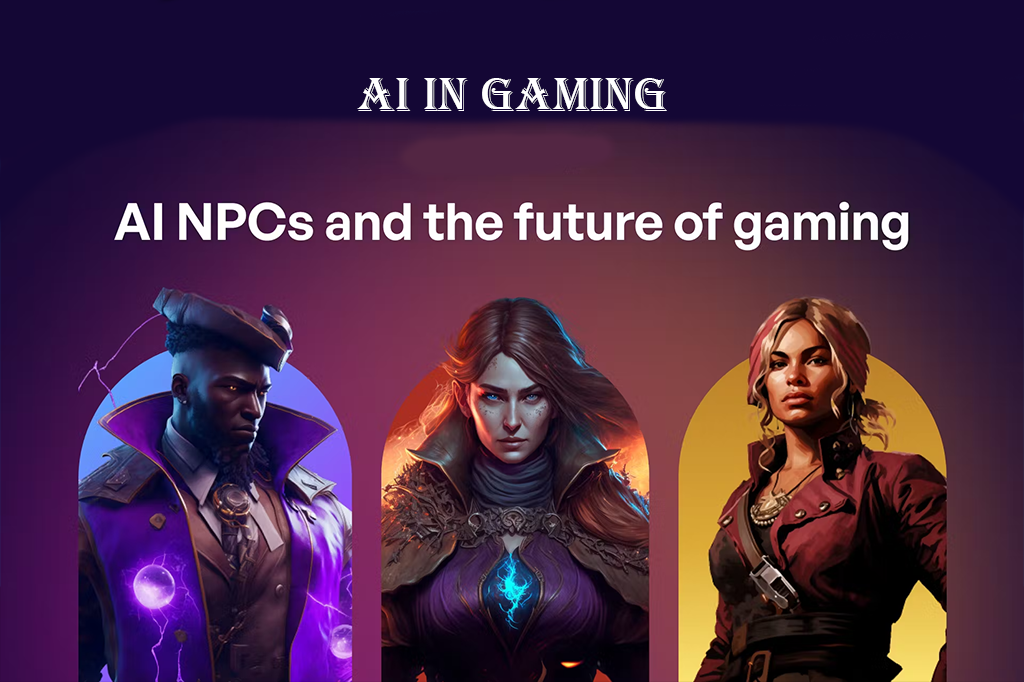
AI in Gaming 🤖
From NPCs that learn to adaptive difficulty—how AI is making games smarter and more immersive
🎮 Introduction
For decades, video games have pushed the limits of technology. From pixelated 8-bit adventures to photorealistic open worlds, every era has been defined by innovation. Today, the next big leap is not just about graphics or speed—it’s about intelligence. Artificial Intelligence (AI) is transforming how games are designed, played, and experienced. NPCs are becoming smarter, difficulty levels are adjusting to player performance, and virtual worlds are evolving in ways that feel alive. AI isn’t just a background tool anymore—it’s becoming the core of modern gaming.
🤖 Smarter NPCs: Beyond Scripted Behavior
Non-Playable Characters (NPCs) have long been the backbone of immersive games, but traditionally, their behavior has been predictable. They followed pre-coded paths, repeated the same dialogues, and often felt more like obstacles than characters.
AI is changing this. Modern NPCs can adapt to player actions, learn patterns, and react dynamically. A standout example is the Nemesis System in Middle-earth: Shadow of Mordor, where enemy orcs remembered past encounters, taunted players, and grew stronger after defeats. This level of reactivity made each playthrough feel unique.
In The Last of Us Part II, NPCs are designed with AI-driven emotional intelligence. Enemies call out each other’s names, adapt strategies when allies fall, and even retreat if outnumbered. These small details add depth, making players feel like they’re fighting real opponents rather than scripted bots.
Looking ahead, NPCs may soon be powered by advanced machine learning models capable of generating speech, behavior, and tactics on the fly—creating an experience closer to interacting with real humans.
🎯 Adaptive Difficulty: Games That Adjust to You
Gamers come in all skill levels, and striking the right balance between challenging and enjoyable has always been tricky. Traditionally, games offered static settings—easy, normal, or hard—but AI is now making difficulty more fluid.
Adaptive difficulty uses AI to monitor how a player performs in real-time. If you’re breezing through levels, the AI ramps up enemy aggression. If you’re struggling, it subtly eases the challenge. This keeps players engaged without frustration or boredom.
For example, in Resident Evil 4, the AI system adjusted enemy health and aggression based on the player’s performance. Similarly, racing games like Forza Horizon use “Drivatar” AI that learns driving styles from real players, creating a personalized challenge that evolves with you.
As AI grows more sophisticated, adaptive difficulty may become invisible, seamlessly creating a personalized difficulty curve that feels natural rather than artificial.
📖 Procedural Storytelling: Infinite Narratives
Storytelling has always been central to gaming, but AI is redefining how narratives unfold. Instead of linear scripts, AI-powered storytelling can generate branching plots that respond dynamically to player decisions.
Imagine a role-playing game where every choice you make—not just major ones, but even small conversations—reshapes the world in real-time. While games like Mass Effect and Detroit: Become Human offer branching storylines, these are still pre-written. AI promises something more: living narratives that evolve endlessly.
Companies are already experimenting with AI-driven narrative tools. Procedural storytelling could allow for games where no two players experience the same story, with NPCs capable of unique dialogue, emotions, and even personalities shaped by past interactions.
🛠️ AI in Game Development
AI isn’t just changing gameplay—it’s revolutionizing how games are built. Developers are now using AI for:
-
Level design – Generating maps, dungeons, and terrains procedurally.
-
Testing & bug detection – AI bots can playtest thousands of times faster than humans, catching flaws early.
-
Voice synthesis – AI-generated voices can create dialogue for NPCs without extensive voice acting sessions.
-
Animation & physics – AI helps automate realistic movements, from facial expressions to character animations.
This doesn’t replace human creativity, but it does free developers to focus on world-building, narrative, and artistic vision while letting AI handle repetitive or technical tasks.
☁️ Cloud Gaming + AI: Smarter Experiences Everywhere
With the rise of services like Xbox Cloud Gaming, GeForce NOW, and PlayStation Plus, AI is playing a crucial role in optimizing performance. Cloud gaming requires ultra-low latency and adaptive quality streaming, and AI helps manage both.
For example:
-
AI algorithms predict network fluctuations and adjust graphics or resolution accordingly.
-
Machine learning optimizes server load, ensuring smooth gameplay even during peak hours.
-
Personalized recommendations suggest games based on playstyle and preferences.
This merging of AI and cloud technology could make gaming more accessible, breaking the need for expensive hardware while delivering intelligent, responsive experiences anywhere.
⚠️ Challenges & Concerns
As exciting as AI in gaming is, it comes with challenges:
-
Unpredictability – AI-driven NPCs could behave in ways that break game balance or frustrate players.
-
Fairness – Adaptive difficulty might feel unfair if players realize the system is manipulating outcomes.
-
Ethics – AI-generated dialogue or behavior could unintentionally create offensive or biased content.
-
Development costs – Advanced AI systems require resources and expertise that smaller studios may lack.
These hurdles must be addressed to ensure AI enhances games rather than detracts from them.
🚀 Conclusion: The Future of AI in Gaming
AI is no longer just a behind-the-scenes tool—it’s becoming the heart of modern gaming. Smarter NPCs make worlds feel alive, adaptive difficulty personalizes challenges, and AI-driven narratives promise infinite replayability. Combined with cloud gaming and next-gen consoles, we’re entering a new era where every playthrough feels uniquely ours.
The future of gaming won’t just be about better graphics—it will be about smarter, more immersive, and deeply personal experiences. And as AI continues to evolve, the line between reality and virtual play will blur even further.
