


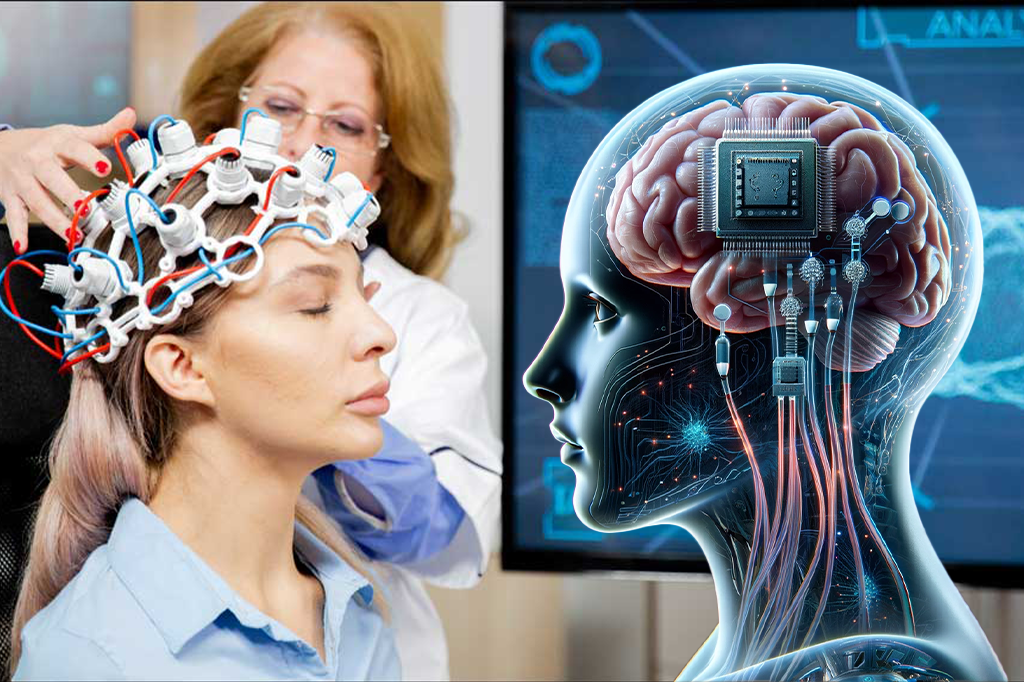
In the past few decades, we’ve seen technology evolve from bulky computers to powerful smartphones and artificial intelligence (AI) systems capable of assisting us in everyday tasks. But perhaps one of the most groundbreaking frontiers of modern science is neural interfaces—the direct communication pathway between the human brain and machines. This field, often referred to as brain-computer interfaces (BCIs), has the potential to transform how we interact with technology, medicine, and even each other.
What Are Neural Interfaces?
Neural interfaces are systems that enable direct communication between the brain’s neural activity and an external device such as a computer, prosthetic limb, or even AI-powered software. These interfaces work by detecting electrical signals generated by the brain, interpreting them, and translating them into commands that a machine can understand.
There are two main types:
-
Invasive Interfaces: Devices implanted directly into the brain tissue, offering highly accurate readings but requiring surgery.
-
Non-invasive Interfaces: Systems like EEG headsets that read brain activity from outside the skull, less precise but safer and easier to use.
The Evolution of Neural Interfaces
The concept of reading brain signals is not entirely new. In the 1970s, researchers began experimenting with electroencephalography (EEG) to capture brain waves. Early systems were limited, but they laid the foundation for today’s breakthroughs.
Fast forward to the present, and we have companies like Neuralink (founded by Elon Musk), Kernel, and Synchron, pushing boundaries with devices that can restore mobility, help people communicate, and potentially enhance human cognition.
Real-World Applications of Neural Interfaces
1. Medical Rehabilitation
One of the most promising uses of neural interfaces is in healthcare. BCIs are helping individuals with paralysis regain independence by controlling robotic arms or wheelchairs with their thoughts. Cochlear implants, often considered an early form of neural interface, already allow people with hearing loss to perceive sound.
2. Restoring Communication
Patients with conditions like ALS (Amyotrophic Lateral Sclerosis) often lose the ability to speak or move. Neural interfaces can translate their brain activity into text or speech, giving them a voice once again.
3. Neuroprosthetics
Robotic limbs controlled by thought are no longer science fiction. Advanced prosthetics connected to neural interfaces allow users to move artificial arms and hands almost as naturally as biological ones.
4. Cognitive Enhancement
Beyond medical applications, neural interfaces could one day enhance memory, focus, or even allow people to “upload” and “download” knowledge. Imagine learning a new language or skill in minutes—something currently seen in movies but being explored by futurists.
5. Human-AI Collaboration
As AI systems grow more advanced, neural interfaces may provide a seamless way to interact with them. Instead of typing or speaking commands, we could directly “think” instructions to AI assistants or computers.
Challenges and Risks
While neural interfaces are exciting, they also raise significant challenges:
-
Safety: Invasive devices require surgery, carrying risks of infection or long-term brain damage.
-
Accuracy: Current non-invasive systems struggle with precision and can misinterpret signals.
-
Privacy Concerns: If thoughts can be read, how do we ensure mental privacy? Unauthorized access to brain data could become a serious ethical issue.
-
Cost and Accessibility: Advanced brain-machine technologies are expensive, limiting access to only a few individuals today.
Ethical Considerations 🧠⚖️
As with any emerging technology, neural interfaces raise deep ethical questions. Who owns the data generated by your brain? Should employers be allowed to monitor employees’ focus using BCIs? Could governments misuse the technology for surveillance or control?
These concerns highlight the importance of developing strong policies and regulations to protect individual rights as the technology matures.
The Future of Neural Interfaces
Looking ahead, neural interfaces could redefine the relationship between humans and machines. Experts envision:
-
Seamless Virtual Reality: Direct brain connections creating ultra-immersive experiences without headsets or controllers.
-
Space Exploration: Astronauts using BCIs to control equipment in hazardous environments.
-
Brain-to-Brain Communication: The possibility of transmitting thoughts directly between individuals, creating a new form of human connection.
Some futurists even predict the merging of human intelligence with AI, leading to what is often called “symbiotic intelligence.” This could be the next step in human evolution, where technology and biology become intertwined.
Conclusion
Neural interfaces 🧠 represent one of the most revolutionary technologies of our time. From restoring lost abilities to enhancing human cognition and communication, BCIs hold the promise of transforming healthcare, technology, and society at large. But with this promise comes responsibility—ensuring safety, privacy, and ethical use will be just as important as advancing the technology itself.
We are still in the early stages of this journey, but the future is clear: the line between minds and machines is beginning to blur. As neural interfaces continue to evolve, they may redefine not only how we interact with technology but also what it means to be human.
