


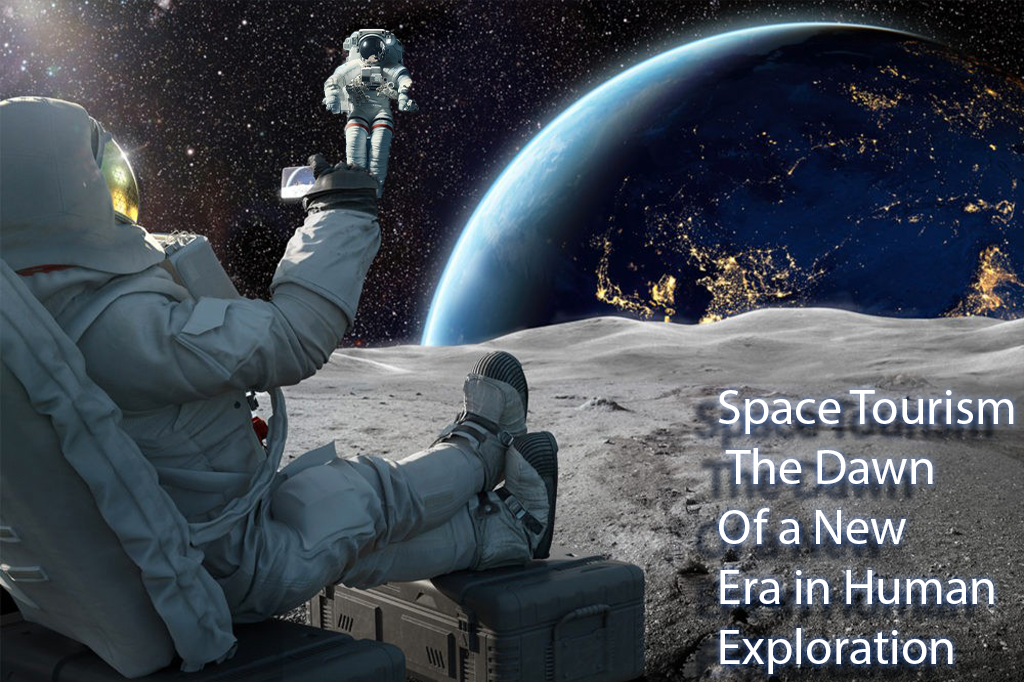
For centuries, humanity has looked up at the night sky with wonder, dreaming of traveling beyond Earth. What was once the realm of science fiction—space travel for ordinary people—is now becoming a reality. Space tourism, a concept that sounded like fantasy just a few decades ago, is rapidly emerging as one of the most exciting industries of the 21st century. With private companies leading the way, the dream of experiencing space is no longer limited to astronauts. Instead, it’s evolving into an exclusive, and eventually mainstream, adventure for civilians.
The Rise of Commercial Space Tourism 🚀
Space exploration was historically dominated by government agencies like NASA, ESA, and Roscosmos. However, the past two decades have witnessed the entry of private space companies—SpaceX, Blue Origin, and Virgin Galactic—that are reshaping the industry. Their goal? To make space accessible not just for exploration, but also for tourism.
-
Virgin Galactic: Richard Branson’s company focuses on suborbital flights, where passengers experience a few minutes of weightlessness and breathtaking views of Earth before returning.
-
Blue Origin: Founded by Jeff Bezos, Blue Origin’s New Shepard spacecraft offers similar suborbital experiences, emphasizing reusability and passenger comfort.
-
SpaceX: Elon Musk’s SpaceX is pushing further, aiming for orbital flights and even missions to the Moon and Mars. Their Crew Dragon capsule has already flown private citizens into orbit.
This competition among billionaires may seem like a space race of egos, but it has sparked innovation and lowered costs, setting the foundation for a future where space tourism is not just a luxury but potentially an attainable experience for many.
What Does a Space Tourist Experience? 🌍✨
A space tourist’s journey is unlike any other adventure on Earth. Depending on the type of trip, passengers can expect:
-
Suborbital Flights: A rocket takes you to the edge of space (above 80–100 km). Here, you experience weightlessness for a few minutes and witness Earth’s curvature against the backdrop of the black cosmos.
-
Orbital Flights: These are longer and more intense, lasting several days. Tourists live inside a spacecraft, orbiting Earth every 90 minutes, with stunning sunrise and sunset views.
-
Future Moon Trips: Companies like SpaceX are already planning missions that will carry civilians around the Moon, offering an otherworldly view of Earthrise.
Imagine floating in zero gravity, gazing at our planet from above, and realizing just how fragile and interconnected life truly is. Many astronauts describe this as the “overview effect”—a profound shift in perspective that changes the way people see Earth and humanity.
The Cost of Space Tourism 💰
At present, space tourism is a luxury reserved for the wealthy. A ticket on Virgin Galactic costs about $450,000 per person, while Blue Origin’s prices are not publicly fixed but have reportedly exceeded $1 million in auctions. Orbital flights with SpaceX are significantly more expensive, reaching into the tens of millions.
However, as with commercial air travel in its early days, prices are expected to drop as technology advances and competition grows. What costs hundreds of thousands today could, in a few decades, become available to middle-class adventurers.
Benefits Beyond Tourism 🌐
Space tourism isn’t just about thrill-seeking. It carries broader benefits:
-
Technological Innovation: Developing reusable rockets, safer spacecraft, and efficient life-support systems benefits not only space travel but also industries on Earth.
-
Inspiration for Future Generations: Seeing civilians travel to space inspires young scientists, engineers, and explorers to pursue STEM careers.
-
Global Awareness: Space tourists often return with a heightened sense of environmental consciousness, reinforcing the importance of protecting Earth.
-
Economic Growth: The space tourism industry is expected to generate billions, creating jobs and fueling advancements in aerospace, hospitality, and science.
Challenges Facing the Industry ⚠️
While space tourism is exciting, it faces several challenges:
-
Safety Risks: Space travel is inherently dangerous. Even with rigorous testing, the possibility of accidents remains. Companies must ensure the highest safety standards.
-
High Costs: Until prices drop significantly, space tourism will remain accessible only to millionaires and billionaires.
-
Environmental Concerns: Rocket launches emit greenhouse gases and particles that can affect the atmosphere. Balancing exploration with sustainability is crucial.
-
Health Risks: Exposure to radiation, zero gravity, and high G-forces can affect passengers, requiring medical screening and preparation.
The Future of Space Tourism 🌌
The next decade will likely witness rapid developments in space tourism:
-
Luxury Space Hotels: Companies like Orbital Assembly are planning orbital hotels where guests can stay in space for days or weeks. Imagine sipping coffee while watching Earth rotate below you!
-
Moon Tourism: SpaceX’s upcoming DearMoon project, funded by Japanese billionaire Yusaku Maezawa, aims to take artists and creators on a journey around the Moon.
-
Mars Dreams: Though still far off, Elon Musk envisions Mars colonization, which could one day open opportunities for interplanetary tourism.
Just as air travel revolutionized human mobility in the 20th century, space tourism may redefine exploration in the 21st and 22nd centuries.
Conclusion 🌠
Space tourism is no longer a dream—it’s the beginning of a new chapter in human history. While currently limited to the wealthy elite, advancements in technology and competition promise a future where millions could experience the wonders of space. The sight of Earth from above, the feeling of weightlessness, and the thrill of venturing beyond our world mark the dawn of a new era.
As we stand on the brink of this cosmic adventure, space tourism reminds us of humanity’s boundless curiosity and drive to explore. From suborbital flights to lunar journeys, the stars are no longer unreachable—they are becoming our next destination.
The space tourism era has begun, and the journey has only just taken off.
