


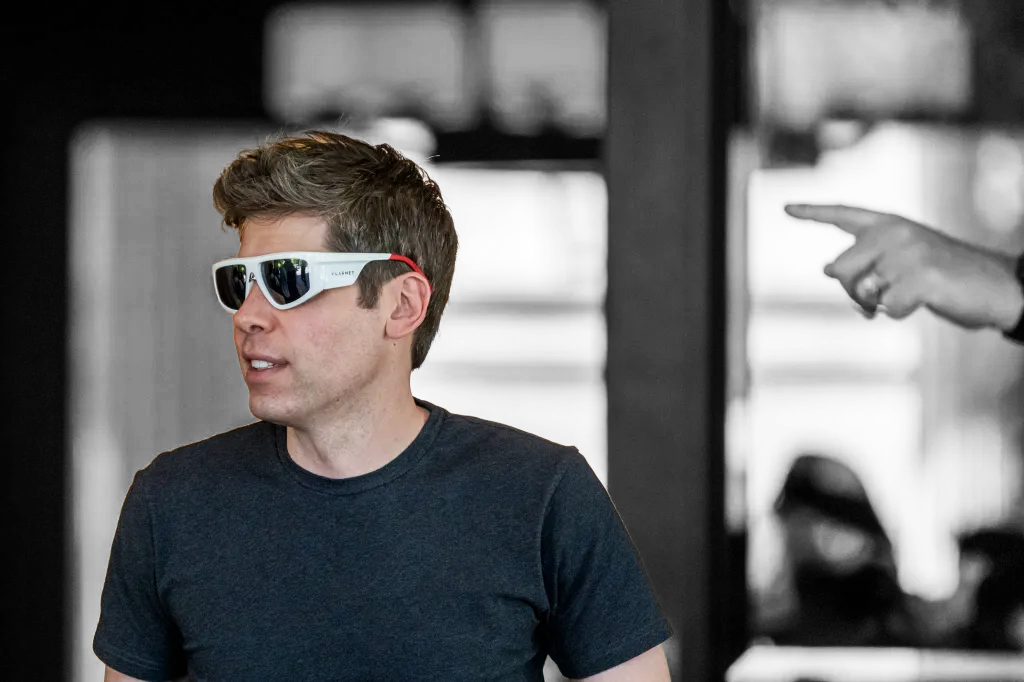
From the window of a Mediterranean restaurant in San Francisco, Alcatraz Island sits quietly in the distance. Inside, however, the atmosphere is anything but calm. The tables are lined with seafood entrées that cost hundreds of dollars, but no one is here to admire the menu. Instead, the room is filled with tech reporters exchanging casual conversation until OpenAI CEO Sam Altman makes a sudden entrance.
Holding a bare iPhone without a protective case, Altman interrupts the chatter. The sight sparks an offhand remark from one of the reporters: “No case? That’s a bold choice.” Altman laughs, unfazed. For him, the elegance of Apple’s design outweighs the risk of a $1,000 replacement. With a grin, he teases the group: “We’re going to ship something so beautiful that if you cover it with a case, I’ll personally hunt you down.”
The remark, half joke and half sales pitch, sets the tone for the evening. Altman hasn’t gathered a dozen journalists just to talk about OpenAI’s latest model, GPT-5. Instead, the dinner hints at something bigger: OpenAI’s desire to expand far beyond its reputation as the “ChatGPT company.”
GPT-5’s Rocky Start
The dinner takes place shortly after the official launch of GPT-5, a release that has left many in the tech world underwhelmed. GPT-4 had stunned the industry in 2023 by outperforming every competitor and redefining expectations of what AI could achieve. GPT-5, however, lands with less impact. Early users reported that its responses felt too cold and robotic, prompting OpenAI to roll back some changes and reinstate GPT-4o alongside a model selector.
Nick Turley, OpenAI’s VP of ChatGPT, acknowledges the criticism. “GPT-5 was very to the point, which I personally liked,” he admits. “But many people prefer a warmer style, something closer to how ChatGPT used to feel.” OpenAI has since begun rolling out updates to make the model’s responses friendlier without slipping into exaggerated positivity.
Altman also takes responsibility for missteps, especially around communication. “I just thought we screwed that up,” he says, referring to the abrupt removal of GPT-4o. He promises that in the future, users will receive clearer transition periods when models are deprecated.
Despite the mixed reception, usage statistics tell another story. Within 48 hours of GPT-5’s launch, OpenAI’s API traffic doubled, creating so much demand that the company ran short on GPUs. Several AI coding assistants have already switched to GPT-5 as their default model, signaling strong developer adoption even as consumer sentiment remains divided.
Looking Beyond Model Releases
What becomes clear during the dinner is that OpenAI doesn’t want to be defined solely by its model launches. In 2023, GPT-4 felt like the centerpiece of the company. Now, executives are positioning GPT-5 as just one piece of a much larger vision.
Altman introduces Fidji Simo, who will soon join OpenAI as the CEO of applications. Her role will involve building and managing consumer apps outside of ChatGPT. These products haven’t been unveiled yet, but one possibility is an AI-powered browser designed to compete with Google Chrome. Altman even floats the idea of buying Chrome outright, jokingly asking if it’s really for sale.
Social media is another area of interest. Altman criticizes the current use of AI in platforms like Facebook, Instagram, and TikTok, describing it as uninspiring. He says he’s intrigued by the idea of designing “a much cooler type of social experience with AI.”
Beyond software, OpenAI is also exploring ventures in hardware and biotech. Altman confirms that the company is considering an investment in Merge Labs, a startup working on brain-computer interfaces that could compete with Elon Musk’s Neuralink. While the deal isn’t finalized, it highlights OpenAI’s ambition to integrate its models into entirely new domains.
Balancing Risks and Responsibilities
One recurring theme of the evening is OpenAI’s responsibility to its users. Turley explains that the company has consulted mental health experts to create guidelines for how GPT-5 should respond in sensitive conversations. The goal is to avoid reinforcing harmful behaviors while still offering empathetic responses.
Altman estimates that fewer than 1% of ChatGPT users have developed unhealthy relationships with the AI. Yet even that small percentage translates into millions of people worldwide. Striking the right balance between helpfulness and safety remains one of OpenAI’s toughest challenges.
The Bigger Picture: Building an AI Empire
If there is one takeaway from the evening, it’s that OpenAI is no longer satisfied with being known as the maker of ChatGPT. Instead, the company is setting its sights on becoming a multifaceted technology giant, with ambitions spanning consumer apps, enterprise software, search, robotics, and even energy.
The parallels to Google’s parent company, Alphabet, are hard to ignore. But Altman’s vision may be even broader. As OpenAI invests in infrastructure like data centers and explores consumer hardware, it is building the foundation for an empire that could rival the largest names in Silicon Valley.
With such massive ambitions comes the need for massive funding. Many in the industry believe that OpenAI will eventually go public to secure the capital required for its long-term projects. If so, nights like this — dinners with reporters, candid conversations, and strategic hints about the future — may serve as Altman’s way of shaping the narrative ahead of that transition.
Conclusion
The dinner in San Francisco began with small talk about phones and cases, but by the end of the night, the conversation had shifted to something much larger. GPT-5 may not have delivered the same shock as GPT-4, but OpenAI’s story is no longer just about individual model releases. It’s about a company evolving into something far bigger — a force determined to redefine search, social media, hardware, and human-computer interaction itself.
OpenAI’s future is not just about AI models. It’s about building the infrastructure and products that will shape how billions of people interact with technology in the years to come.
