


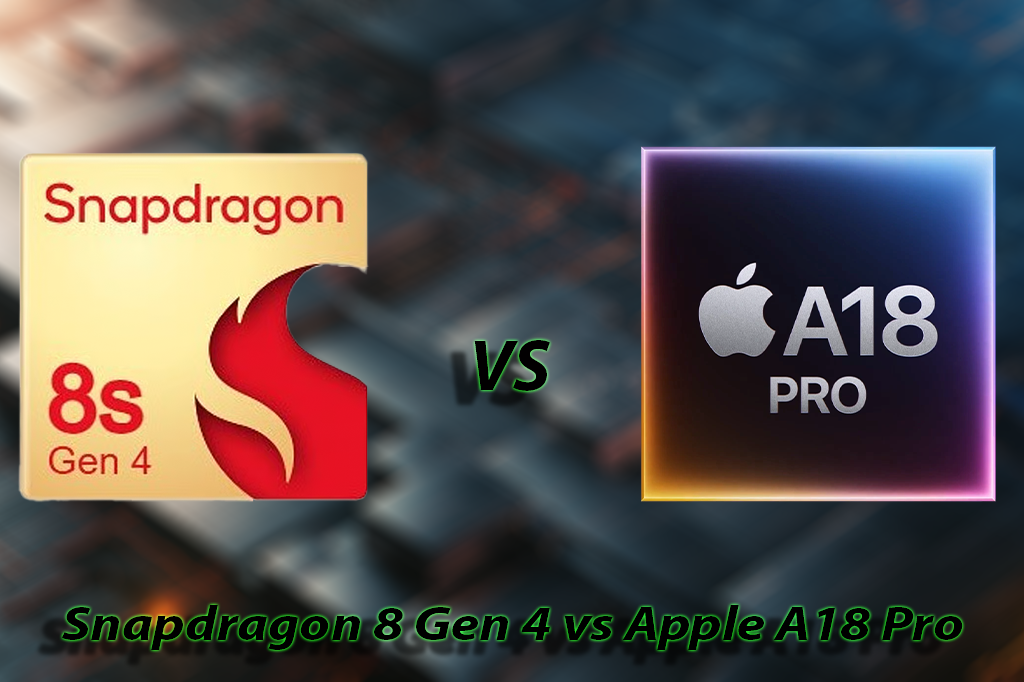
The battle for smartphone performance supremacy has never been more intense. In 2025, two giants—Qualcomm’s Snapdragon 8 Gen 4 and Apple’s A18 Pro—are set to redefine the limits of mobile computing. Both chips promise groundbreaking improvements in AI, graphics, efficiency, and raw processing power. But which one truly stands out? Let’s break down their features, performance benchmarks, and real-world implications to see who wins the next-gen mobile chip war.
📌 Overview of the Contenders
-
Snapdragon 8 Gen 4: Qualcomm’s flagship chip for Android devices in 2025, built on TSMC’s 3nm process with a brand-new Oryon CPU architecture. It focuses on AI acceleration, improved gaming performance, and better power efficiency.
-
Apple A18 Pro: Apple’s latest custom silicon, also built on the 3nm process, optimized for the iPhone 16 Pro series. Known for Apple’s deep integration of hardware and software, the A18 Pro emphasizes efficiency, machine learning, and GPU power for console-like gaming experiences.
Both chips are designed to push the boundaries of mobile technology, but they take different approaches.
⚡ CPU Performance – Raw Power vs Efficiency
-
Snapdragon 8 Gen 4 introduces Qualcomm’s custom Oryon cores, moving away from ARM’s reference designs. The chip is expected to feature 2 high-performance cores + 6 efficiency cores, delivering a balance of power and battery life. Early leaks suggest a 40% improvement in multi-core performance over the Snapdragon 8 Gen 3.
-
Apple A18 Pro, on the other hand, continues Apple’s tradition of dominating in single-core performance. Built with 2 performance cores + 4 efficiency cores, it reportedly delivers up to 15% faster single-core speeds compared to the A17 Pro. Apple’s chips have always led in single-core efficiency, which is crucial for everyday tasks and app responsiveness.
👉 Verdict:
-
For multi-core heavy tasks like multitasking, gaming, or video rendering, Snapdragon 8 Gen 4 is expected to shine.
-
For single-core and app optimization, Apple A18 Pro keeps its crown.
🎮 GPU & Gaming Performance – Adreno vs Apple GPU
Gaming is one of the biggest battlegrounds for mobile chips.
-
Snapdragon 8 Gen 4 features an upgraded Adreno GPU, with rumored support for FSR 4 (FidelityFX Super Resolution), Frame Generation, and Ray Tracing enhancements. Qualcomm is pushing PC-like gaming features into smartphones, aiming for smoother gameplay at up to 120 FPS.
-
Apple A18 Pro builds on the A17 Pro’s console-grade GPU with Pro Shader Rendering (PSSR), better ray tracing, and Metal API optimizations. The A18 Pro is designed for Apple Arcade and AAA mobile ports, ensuring console-quality visuals on iPhones.
👉 Verdict:
-
Snapdragon 8 Gen 4: Better for gamers who want flexibility (Android + cloud gaming + emulators).
-
Apple A18 Pro: Best for Apple ecosystem users, especially with AAA titles optimized exclusively for iOS.
🤖 AI & Machine Learning – Smarter Phones
AI is at the heart of next-gen chips.
-
Snapdragon 8 Gen 4 includes Qualcomm’s most advanced Hexagon NPU, capable of handling on-device generative AI models (like ChatGPT-style assistants) with billions of parameters. Expect faster AI image generation, live translations, and real-time voice assistance—all offline.
-
Apple A18 Pro uses a next-gen Neural Engine with reportedly 20+ trillion operations per second (TOPS), integrated deeply into iOS 18. Apple is focusing on AI-driven photography, personalized Siri, and smarter system optimizations.
👉 Verdict:
-
Snapdragon excels at flexibility and raw AI power.
-
Apple A18 Pro wins in ecosystem-level AI integration.
🔋 Battery Life & Efficiency – Who Lasts Longer?
-
Snapdragon 8 Gen 4, while powerful, faces challenges in energy efficiency. Early reports suggest that while performance is massive, battery drain under load is higher than the A18 Pro. Qualcomm is optimizing with 3nm process + improved thermal management.
-
Apple A18 Pro, thanks to Apple’s tight control over hardware and software, is more power-efficient. Apple’s chips traditionally outperform Qualcomm in battery life, especially in video playback and light tasks.
👉 Verdict:
-
For longer endurance, the Apple A18 Pro is likely the winner.
-
For raw gaming power, expect the Snapdragon 8 Gen 4 to drain more battery.
📶 Connectivity & Extra Features
-
Snapdragon 8 Gen 4 integrates the X75 5G modem, supporting Wi-Fi 7, satellite connectivity, and advanced carrier aggregation. It’s the most feature-packed chip for global networks.
-
Apple A18 Pro continues with Apple-designed 5G modem improvements but still trails Qualcomm in raw modem tech. However, Apple optimizes for seamless iOS experience rather than raw speed.
👉 Verdict:
-
Snapdragon 8 Gen 4 wins in global connectivity.
-
Apple A18 Pro is enough for iPhone users but less versatile outside Apple’s ecosystem.
🏆 Final Verdict – Which Chip Wins?
Both chips dominate in their own ways:
-
Snapdragon 8 Gen 4 is the powerhouse for gamers, power users, and Android enthusiasts who want raw performance, flexibility, and cutting-edge AI.
-
Apple A18 Pro is the king of efficiency, ecosystem integration, and single-core performance—perfect for iPhone users who value longevity and smooth day-to-day use.
👉 If you want maximum power, advanced AI, and gaming performance, Snapdragon 8 Gen 4 is your pick.
👉 If you prefer efficiency, optimization, and iOS integration, the Apple A18 Pro wins.
